
Pipe Insulation & Freeze Protection in Green Bay, WI
Pipe insulation is the simplest way to protect Green Bay plumbing from the next cold snap. Insulating exposed pipes in unheated areas slows heat loss, so the water inside is far less likely to freeze. Call and we will connect you with an independent local plumbing professional who can assess the exposed runs in your home.
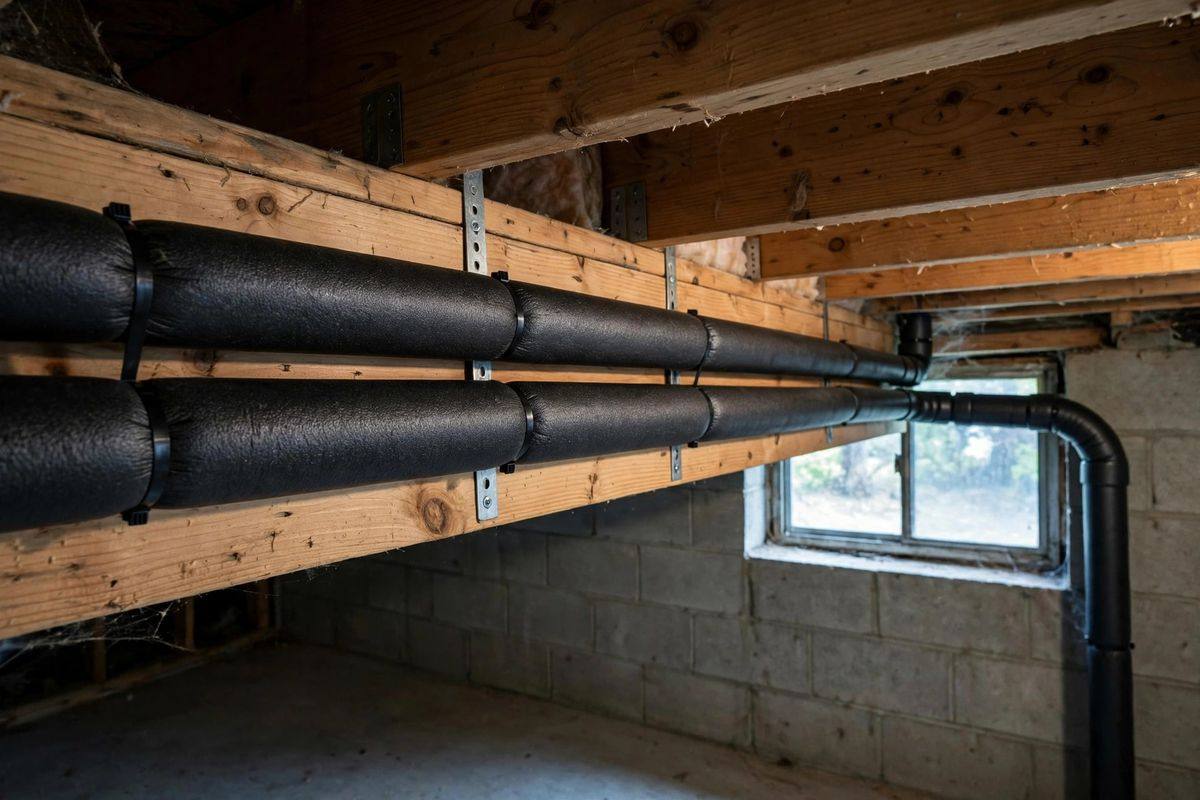
What pipe insulation involves
Insulation sleeves are fitted around exposed water pipes, with special attention to the runs that freeze first: pipes in crawl spaces, attics, garages, and basements, pipes against exterior walls, and pipes in cabinets on outside walls. Joints and bends are covered too, because a gap in the insulation is where freezing starts. The professional can also advise on sealing cracks and holes in outside walls and foundations near pipes, closing outside vents, and keeping garage doors closed if water lines run through the garage.
Signs your pipes need insulation
- A pipe has frozen before, even once.
- You can see bare water pipes in a crawl space, attic, garage, or basement.
- Pipes run along an outside wall or over an unheated garage.
- The home is older, with pipe runs that were never insulated — common in Green Bay, where the median home was built in 1971.
Heat tape and other protection
For pipes that cannot be fully protected by insulation alone, a local professional may suggest UL-listed heat tape or heat cable, installed exactly as the manufacturer directs. Heat tape should never be used on a pipe that is already frozen, never used if it is damaged, and never wrapped with insulation. Frayed or worn heat tape should be replaced, because damaged heat tape can start a fire. Ask the professional about the right option for your home when you call.
Local relevance
Green Bay’s January average low is 11.1°F, and cold spells can last for days — in January 2025 a cold spell from the 19th to the 22nd brought an extreme cold warning for Northeast Wisconsin. Insulating before the first deep freeze is far simpler than thawing a pipe in the middle of one. Homes in older neighborhoods such as Astor East River and Astor often benefit most, because their pipe runs are older and less protected. plumbing help for frozen pipes in Green Bay is often avoidable with insulation fitted in time, and our pipe winterization page covers the full fall checklist.
Frequently asked questions
Which pipes should be insulated?
Any water pipe in an unheated area: crawl spaces, attics, garages, and basements, plus pipes against exterior walls and pipes inside cabinets on outside walls. A local professional can walk the home and point out the runs most at risk.
Does insulation stop pipes freezing completely?
Insulation slows heat loss and makes freezing far less likely, but in a long, severe cold spell it may not be enough on its own. Keeping the heat at 55 degrees or higher, letting a faucet drip in very cold weather, and using heat tape where recommended all help.
Is heat tape safe to use?
Only UL-listed heat tape, installed exactly as the manufacturer directs, should be used. Never use it on a frozen pipe, never use it if it is damaged, and never wrap it with insulation. Replace frayed or worn heat tape, because damaged tape can start a fire.
Need help with a frozen or burst pipe?
Call now and we will connect you with an independent local plumbing professional serving Green Bay and nearby communities.
Call Now: (920) 555-0147