
How to Prevent Frozen Pipes in Green Bay
The best time to deal with a frozen pipe in Green Bay is before it freezes. A few habits, done before the cold arrives, protect most homes: keep the heat steady, let warm air reach the pipes, keep water moving on the coldest nights, and shut down the outdoor water before winter. This guide follows the prevention advice published by Green Bay Water and the American Red Cross.
Keep the heat on, day and night
Keep the heat on and set the thermostat to at least 55 degrees, even when you are away from home. Use the same thermostat temperature day and night during cold weather, rather than turning it down at night. Before winter, replace the thermostat battery. If you are gone for a longer period, ask a relative or friend to check that the heat is running. If you are leaving the home for the entire winter, the plumbing system should be fully drained and the water shut off.
Let warm air reach the pipes
Open cabinet doors under kitchen and bathroom sinks, especially on outside walls, so warm air can reach the pipes. Seal cracks and holes in outside walls and foundations near pipes, and close outside vents. Keep garage doors closed if water supply lines run through the garage.
Keep water moving on the coldest nights
When temperatures are very cold, let a faucet drip — a steady trickle from the faucet served by exposed pipes. Moving water is less likely to freeze. This is a short-term measure for the coldest nights, not a substitute for insulation.
Shut down the outdoor water before winter
Disconnect garden hoses, drain and shut off outside faucets, and drain lawn-irrigation systems before winter. A hose left attached to an outdoor faucet stops the faucet from draining, and the water left inside can freeze and burst the pipe. Our article on outdoor faucets and hose bibbs in winter explains this in more detail.
Insulate pipes in unheated places
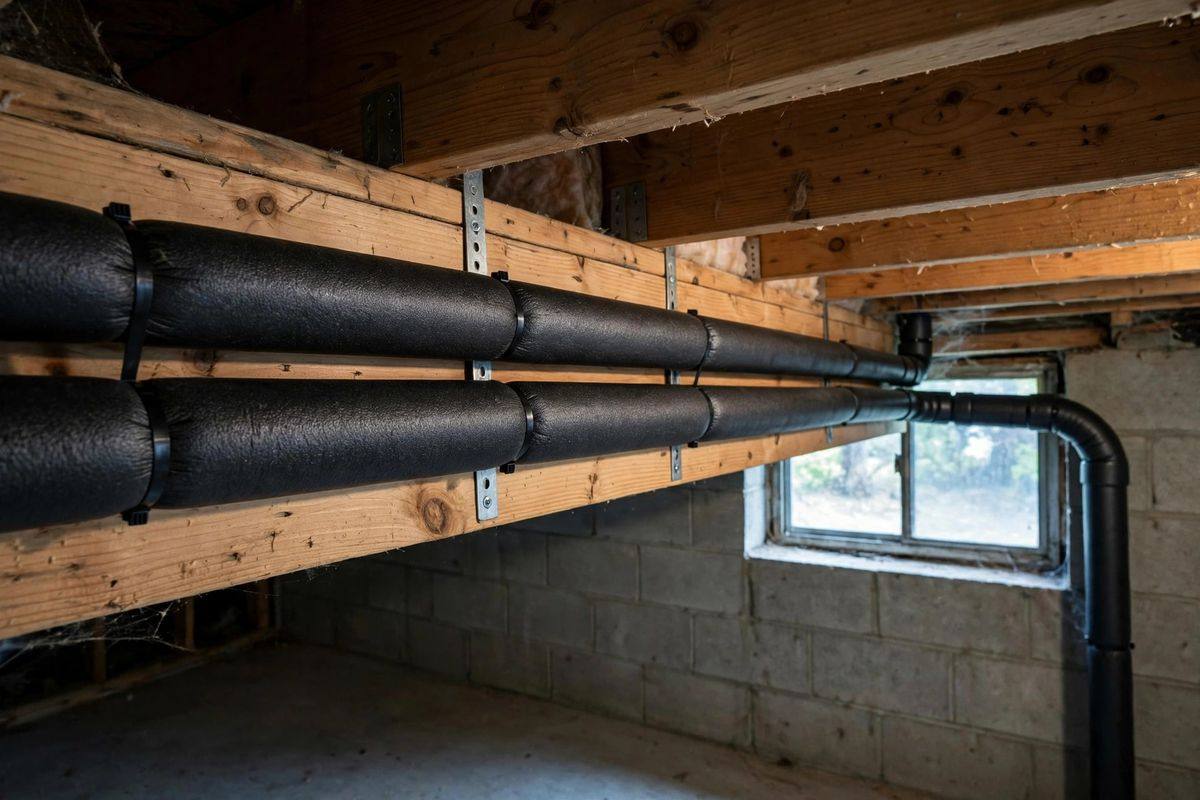
Insulate pipes in crawl spaces, attics, garages, and basements with pipe insulation sleeves. These are the places pipes freeze first in Green Bay homes, especially in older houses. A local professional can point out the runs most at risk; see our pipe insulation and freeze protection service page.
Heat tape: useful, but only used correctly
Use only UL-listed heat tape or heat cable, installed exactly as the manufacturer directs. Never use heat tape on a pipe that is already frozen, never use it if it is damaged, and never wrap it with insulation. Replace heat tape if it is frayed or worn, because damaged heat tape can start a fire.
A short fall checklist
- Thermostat set to at least 55 degrees, battery replaced, same setting day and night.
- Garden hoses disconnected; outside faucets drained and shut off; irrigation drained.
- Pipes in crawl spaces, attics, garages, and basements insulated.
- Cracks near pipes sealed; outside vents closed; garage door kept closed.
- Cabinet doors under sinks on outside walls left open during cold spells.
- A plan for who checks the heat if you go away.
Prevention does not remove every risk. If a pipe does freeze, read what to do if your pipes freeze, and if you need help, frozen pipe repair in Green Bay, WI through our referral service can connect you with an independent local plumbing professional.
Related reading
- What to Do If Your Pipes Freeze
- Outdoor Faucets & Hose Bibbs in Winter
- Pipe Winterization in Green Bay
Frequently asked questions
What temperature should I keep my thermostat at in winter?
At least 55 degrees, day and night, even when you are away from home. Green Bay Water gives the same advice, and the American Red Cross recommends keeping one steady temperature during cold weather.
Should I let a faucet drip when it is cold?
Yes, during very cold weather, let a faucet drip with a steady trickle from the faucet served by exposed pipes. Moving water is less likely to freeze. It is a short-term measure for the coldest nights, not a substitute for insulation.
When should I disconnect my garden hose?
Before winter, and before the first deep freeze. Disconnect the hose, drain the water, and shut off the water supply to the outside faucet. A hose left attached stops the faucet from draining, so water left inside can freeze and burst the pipe.
Frozen or burst pipe? Call now.
Tell us what is happening and we will connect you with an independent local plumbing professional who serves your area.
Call Now: (920) 555-0147